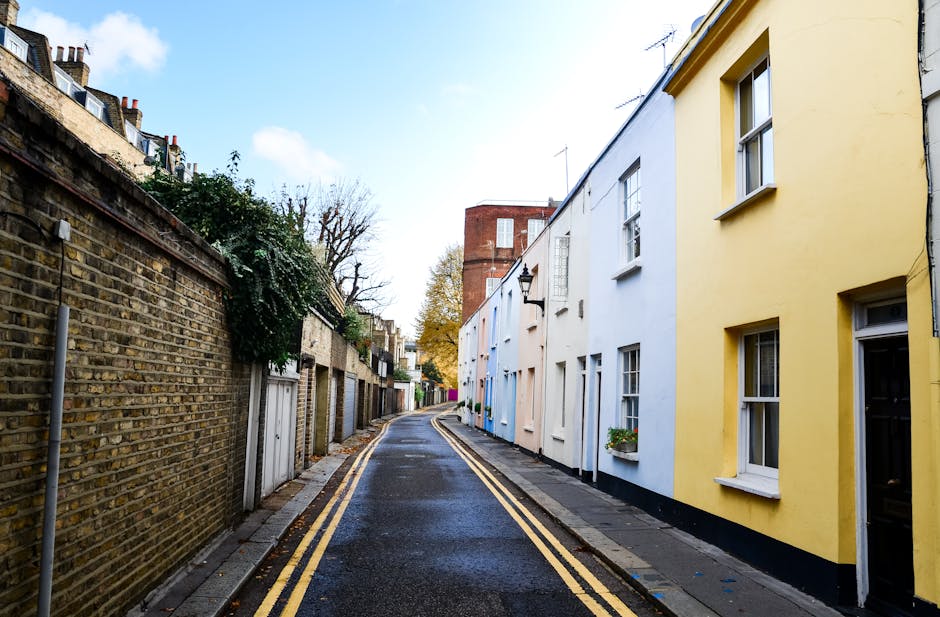
Access problems on narrow streets Ickenham removals solutions
Narrow streets can turn an ordinary move into a bit of a puzzle. If you are dealing with tight corners, parked cars, low-hanging branches, shared driveways, or a front door that sits a long walk from the van, you already know the stress levels can rise fast. The good news is that Access problems on narrow streets Ickenham removals solutions are very manageable when the route, vehicle size, packing plan, and loading process are all thought through properly.
In Ickenham, access issues often come down to practical things rather than dramatic ones: a road that is too tight for a large lorry, a staircase that forces extra carrying distance, or a rush-hour layout that makes timing just as important as muscle. This guide walks through what those access problems really mean, how removal teams solve them, and how to avoid the common mistakes that make a move harder than it needs to be. Truth be told, a calm move usually starts before the van even arrives.
Table of Contents
- Why Access problems on narrow streets Ickenham removals solutions Matters
- How Access problems on narrow streets Ickenham removals solutions Works
- Key Benefits and Practical Advantages
- Who This Is For and When It Makes Sense
- Step-by-Step Guidance
- Expert Tips for Better Results
- Common Mistakes to Avoid
- Tools, Resources and Recommendations
- Law, Compliance, Standards, or Best Practice
- Options, Methods, or Comparison Table
- Case Study or Real-World Example
- Practical Checklist
- Conclusion
- Frequently Asked Questions
Why Access problems on narrow streets Ickenham removals solutions Matters
Access is one of those moving issues that people only fully appreciate once boxes are stacked by the door and the van cannot get close enough. Then suddenly every minute feels longer. A narrow street can affect the whole move: vehicle choice, loading time, parking, lifting distance, and whether furniture can be carried safely without damage.
It matters even more in a place like Ickenham, where residential roads, side streets, and older housing layouts can create awkward access points. A standard removal plan might work perfectly on a wide suburban road, but not on a street with tight width, limited turning space, or parked cars on both sides. That is why access planning is not a nice-to-have. It is the backbone of the job.
From a customer point of view, good access planning reduces stress, protects your belongings, and helps keep the day on schedule. From a mover's point of view, it lowers the risk of bumps, strain injuries, and delays that ripple through the rest of the day. Nobody wants the sofa to get stuck halfway down a path. It happens more often than people think, and it is never fun.
Expert summary: The safest and most efficient narrow-street move is rarely about "doing more lifting". It is about doing less unnecessary carrying, choosing the right van, and setting the sequence of the move before anyone starts walking backwards with a wardrobe.
If you want a broader overview of removal options in the area, it can help to browse the services overview and the local removals in Ickenham page before you decide how to approach a tricky access job.
How Access problems on narrow streets Ickenham removals solutions Works
The process starts with assessment. A good removal team will not just ask how many boxes you have. They will ask about the street, the front door, the stair layout, parking restrictions, and whether there is any room to pause safely close to the property. In practical terms, that means planning the move around access rather than forcing the access to fit the move.
Here is how the solution usually works in real life:
- Measure the challenge - the street width, turning space, path length, doorway size, and any overhead obstacles are checked or discussed in advance.
- Match the vehicle to the road - a smaller van or a split-load approach may be better than trying to force a large vehicle into a tight residential lane.
- Plan loading zones - the team decides where the van can pause safely and how far items will need to be carried.
- Pack for carrying distance - heavier items go into manageable boxes, and fragile items are protected so they can survive a longer hand-carry.
- Sequence the load - bulky furniture, awkward items, and daily essentials are handled in the right order so the move stays efficient.
- Use safer handling methods - proper lifting technique, dollies, straps, blankets, and corner protection reduce risk.
It sounds simple written out like that, but the difference is huge. A move with narrow access can feel smooth when the plan is tight, or chaotic when everyone is improvising. To be fair, most problems happen because people assume the van can just "sort itself out" on arrival. It usually cannot.
If your move includes awkward or heavy items, pairing access planning with specialist handling can make a big difference. For instance, a piano, a large wardrobe, or a heavy sofa is much easier to manage when you also look at piano removals in Ickenham or furniture removals in Ickenham rather than treating everything as a standard box-and-van job.
Key Benefits and Practical Advantages
The biggest benefit is obvious: fewer surprises. But there are several quieter advantages that matter just as much.
- Less damage risk - when access is planned well, furniture is less likely to hit walls, gates, railings, or doorframes.
- Lower physical strain - fewer awkward lifts and fewer extra trips reduce the chance of injury.
- Better timing - narrow roads can delay a move fast; a proper plan keeps the schedule realistic.
- Cleaner logistics - you know where the van will park, what gets moved first, and who carries what.
- Less neighbour friction - in tight streets, being organised helps avoid blocking driveways or causing irritation.
- More flexible service choice - narrow access often suits a man with van in Ickenham or a smaller vehicle better than a larger removal lorry.
There is also a psychological benefit. Once the access issue is acknowledged, people relax. That alone can make the day better. You stop worrying about the unknown and start following a plan. Sounds small. It is not small.
For smaller flats or tighter homes, these benefits are even more noticeable. A move into or out of a compact property can be supported by flat removals in Ickenham, while students often find that student removals in Ickenham are a practical fit for narrow streets and modest load sizes.
Who This Is For and When It Makes Sense
This approach is for anyone whose property is not straightforward to access. That could mean a terraced house on a tight road, a maisonette with a shared entrance, a flat above street level, or a property where parking near the front door is unreliable. In other words, a lot of people.
It makes sense if any of the following sound familiar:
- The van cannot park directly outside the property.
- The road is too narrow for larger vehicles to turn comfortably.
- There are resident-only parking rules or time restrictions.
- Items need to be carried a long way from the van to the door.
- There are stairs, split levels, or awkward internal corners.
- You have one or two bulky items that do not respond well to "careful optimism".
It is also useful for anyone who simply wants fewer headaches on move day. Let's face it, moving is already a lot. If access is likely to be messy, getting ahead of the issue is just sensible. For businesses, the same applies. If you are moving an office or part of one, access planning can keep the day from turning into a line of people carrying monitor boxes through a narrow lane. Not ideal.
For commercial jobs, you might also look at office removals in Ickenham and compare that with the broader local support offered by removal services in Ickenham.
Step-by-Step Guidance
If you want a move to run well on a narrow street, break it into proper stages. That is the part people skip, then wonder why the day feels chaotic by 10:15 a.m.
1. Check the access in advance
Stand outside your property and look at it like a driver would. Is there turning space? Are there parked cars that may stay put until the morning? Is the pavement wide enough to carry boxes safely? You do not need to become a surveyor. Just be honest about what is there.
2. Measure the awkward items
Large wardrobes, bed frames, sofas, mirrors, and pianos are the usual troublemakers. Measure them properly and think about the route out of the property, not just the size of the room they are in. A sofa that fits in the lounge can still be a nuisance when it meets a narrow staircase.
3. Decide on the right vehicle
Smaller vans are often a better choice for tight streets. A larger vehicle may seem efficient on paper, but if it cannot get near the property, efficiency disappears very quickly. Sometimes two smaller runs work better than one over-ambitious one.
4. Prepare the load for carrying distance
Pack boxes with carry distance in mind. Heavy items should be divided sensibly. Fragile items should be cushioned well enough to handle more than one lift. If you are looking for practical packing help, packing and boxes in Ickenham can support a more organised setup.
5. Clear the route
Move bins, plant pots, loose mats, bicycles, and anything else that narrows the passage. A clean route reduces trips and helps the team move safely. It also stops someone from catching a toe on a rogue step or cable. Tiny hazard, big annoyance.
6. Build a realistic schedule
Narrow access usually takes longer. Plan for it. If you need a timed move, let the schedule breathe a bit. Rushing is where mistakes happen, especially when someone is carrying something awkward and trying not to bump a wall.
7. Keep essentials separate
A kettle, documents, chargers, medication, and basic tools should be easy to reach. Once the van is parked a little further away than expected, you will be glad you did. Very glad.
Expert Tips for Better Results
Here are the details that often make the difference between a difficult move and a tidy one.
- Use more, smaller boxes for books, kitchenware, and mixed items. Heavy boxes on a long carry are a bad idea.
- Protect corners early with blankets or padding, especially where a hallway turns sharply.
- Book a sensible time slot so your street is less congested. Early morning can help, though every road is different.
- Keep doors open only when needed to reduce repeated twisting and bumping through narrow gaps.
- Use the right lifting technique rather than brute force. Good posture matters, particularly on stairs. See also solo lifting safety tips and kinetic lifting techniques for practical handling advice.
- Do not overfill the van. A neat load that can be reached quickly is usually better than a packed one that takes ages to unpack.
One small thing people forget: weather. Wet pavements, cold hands, and dark winter afternoons can all make a narrow access job slower. A move in January feels different from one in June, obviously, but it is worth saying out loud.
If you are moving a sofa or bed through a tricky corridor, it can help to read more targeted advice such as sofa handling and storage guidance or bed and mattress moving techniques.
Common Mistakes to Avoid
Most narrow-street issues are predictable. That is the slightly annoying part. The good news is that predictable problems are the easiest ones to prevent.
- Assuming the biggest vehicle is the best vehicle - sometimes smaller is smarter.
- Ignoring parking restrictions - even a perfect lifting plan falls apart if the van has nowhere legal to wait.
- Leaving bulky furniture assembled - a wardrobe that comes apart safely often travels better in sections.
- Packing too heavily - overfilled boxes are slower to carry and more likely to split.
- Forgetting the final carry distance - a move can feel quick until the van must stop two doors away.
- Not protecting floors and thresholds - narrow entrances often mean more scraping and scuffing if precautions are skipped.
There is also a subtle mistake that people make all the time: they underestimate the mental load. When access is awkward, everyone starts guessing. Guessing is rarely helpful. A move works better when someone has already made the decisions.
For pricing concerns and planning expectations, it may also help to look at pricing and quotes and the plain-English guidance in how to avoid hidden fees in Ickenham removals.
Tools, Resources and Recommendations
You do not need a warehouse of specialist kit, but a few sensible tools make narrow-access moves much easier.
| Tool or resource | Why it helps | Best use case |
|---|---|---|
| Furniture blankets | Reduce scuffs and minor impacts | Sofas, table edges, doorframes |
| Straps and grips | Improve control on awkward lifts | Large boxes, white goods, narrow stairwells |
| Small trolley or sack truck | Limits carrying strain over longer distances | Multiple boxes from van to door |
| Floor protection | Prevents scratching and damp shoe marks | Wet weather, polished floors, tight hallways |
| Clear inventory list | Helps sequence loading and unloading | Any move with time pressure |
For a well-organised move, a few supporting pages are worth a look too. If you are still deciding how to pack, the article on creating a packing plan for a stress-free home move is a solid place to start. If you need short-term holding space while access is sorted out, storage in Ickenham may be useful. And if the move date has to be tight, same-day removals in Ickenham can be the practical fallback.
You may also find a calmer day by using a delivery time that suits you and, for very busy households, the option to pack your items and wait for collection can simplify the handover.
Law, Compliance, Standards, or Best Practice
Narrow street removals are not usually about complex legal problems, but they do touch on everyday compliance and best practice. In the UK, it is sensible to respect parking restrictions, keep access routes safe for pedestrians, and avoid blocking driveways or emergency access. Where local rules or permits may apply, the exact requirements depend on the street and the situation, so checking ahead is wise.
For moving teams, the key best practice is simple: do not create unnecessary risk. That includes safe lifting, clear walkways, sensible load weights, and equipment that matches the job. A responsible removals provider should also carry suitable insurance and follow health and safety routines. That is not fancy paperwork. It is basic professionalism.
If you want reassurance around service standards, you can review the company's health and safety policy and insurance and safety information. If you are comparing providers, it is worth checking whether their approach is transparent, whether they explain access risks clearly, and whether they communicate delays early instead of pretending everything is fine when it is clearly not.
Accessibility matters too. If you or someone in your household has mobility needs, it helps to read the accessibility statement and discuss any specific requirements before moving day.
Options, Methods, or Comparison Table
Different access situations call for different approaches. Here is a simple comparison to make the choice clearer.
| Method | Best for | Pros | Trade-offs |
|---|---|---|---|
| Small van with close parking | Short narrow streets with a usable parking space nearby | Efficient, flexible, easier manoeuvring | May need more trips if the load is large |
| Split-load move | Loads that are too large for one tight-access run | Reduces vehicle pressure and awkward packing | Can take longer overall |
| Man and van approach | Smaller homes, flats, lighter moves, difficult streets | Simple, adaptable, cost-conscious | Not ideal for very large household moves |
| Full removals team | Larger homes or heavier furniture with complex access | More lifting support and coordination | Usually more resource-heavy than a small move |
There is no universal winner here. The best option depends on the road, the load, and the time available. Sometimes a modest solution is actually the strongest one. That is moving, really. Practical beats impressive.
If you are still deciding between service styles, compare man with van in Ickenham, man and van in Ickenham, and man with a van in Ickenham to see what fits the scale of your move and the access outside your property.
Case Study or Real-World Example
Imagine a family moving out of a semi-detached home on a narrow Ickenham street. The road is lined with parked cars, and the van cannot sit directly outside the door for long. The main furniture includes a sofa, a bed, two wardrobes, a dining table, and a handful of fragile boxes. Nothing outrageous, but enough to make the layout matter.
Instead of sending in a large vehicle and hoping for the best, the move is planned around a smaller van and a clear loading window. The larger furniture is measured ahead of time, the wardrobes are partially dismantled, and the walkway from the house to the van is kept clear. One person handles the door area, another manages the loading order, and the heavier items go first while energy is highest. A bit old-school, but effective.
The result? Fewer collisions with walls, no rushed carrying, and no time wasted trying to manoeuvre a van where it clearly did not want to go. The move still took effort, of course. Narrow access always does. But it stayed controlled. That is the real goal.
If the property has a particularly awkward item, specialist support can help. A heavy table or delicate instrument may need more than standard loading. The same logic applies if you need house removals in Ickenham with an access-sensitive setup rather than a generic moving day.
Practical Checklist
Use this checklist before move day. It saves a lot of last-minute faffing.
- Confirm the narrowest part of the access route.
- Check whether the van can legally and safely stop nearby.
- Measure oversized furniture and awkward items.
- Dismantle large pieces where possible.
- Pack heavy items into smaller, safer boxes.
- Keep hallways, steps, and entrances clear.
- Protect corners, floors, and doorframes.
- Set aside essentials for immediate access.
- Share access notes with the removal team in advance.
- Build extra time into the schedule.
- Have a backup plan for parking or loading if the street is busy.
- Double-check the final route from property to van.
One tiny but useful habit: walk the route with your phone torch in the evening if the move is in winter. You will spot things that are easy to miss in daylight, especially loose steps, dark corners, or a gate that swings tighter than expected.
Get a free quote today and see how much you can save.
Conclusion
Access problems on narrow streets do not need to derail a move. With the right planning, the right vehicle, and a realistic view of what the street can and cannot handle, even a tight Ickenham road can be managed safely and efficiently. The key is to treat access as part of the move, not as an afterthought. That one mindset shift changes a lot.
If you are preparing for a move and already suspect the street will be awkward, start early, ask direct questions, and keep the packing practical. A move that feels "a bit tight" in the planning stage usually feels much better on the day. And honestly, that is what most people want: less drama, fewer scuffs, and a calm finish.
When the boxes are in and the van pulls away, it is a good feeling. Quiet, even. A proper little relief.
Frequently Asked Questions
What are the most common access problems on narrow streets in Ickenham?
The most common issues are limited parking, tight turning space, parked cars blocking the road, long carry distances from van to property, and awkward entrances with stairs or narrow hallways.
How do removals teams handle narrow street access safely?
They usually plan the route in advance, choose a suitable vehicle size, protect the property, use safe lifting methods, and organise the load so items can be carried efficiently without rushing.
Is a man and van service better for tight access moves?
Often, yes. A smaller vehicle can be easier to position on a narrow street, and the service can be more flexible for flats, small houses, and lighter loads. For larger homes, a fuller removals setup may still be better.
Should I dismantle furniture before a narrow access move?
Usually, if it is safe to do so. Breaking down wardrobes, bed frames, and tables can make carrying much easier and reduce the risk of damage on tight turns or stairways.
How much extra time should I allow for difficult access?
There is no single rule, but it is sensible to allow extra time whenever the van cannot park close to the entrance or when the carry route is long. A realistic schedule is better than a rushed one.
What should I tell the removals company before moving day?
Tell them about street width, parking restrictions, stairs, lifts, long carry distances, large items, and any access limitations. The more precise you are, the better they can plan.
Can narrow streets cause extra moving costs?
They can, depending on the extra time, vehicle choice, or specialist handling needed. The best way to avoid surprises is to ask for a clear quote and explain the access conditions fully in advance.
What if my road is too tight for a large van?
That is common enough. A smaller van, a different parking position, or a split-load approach may solve it. In some cases, storage or a staged move is the safer answer.
Do I need special permission to park for a removal on a narrow street?
Sometimes local parking restrictions, permit zones, or resident rules apply. It is worth checking the street situation early so the move does not stall at the last minute.
How can I reduce the risk of damage in a narrow access move?
Protect corners and floors, use the right packing materials, dismantle awkward furniture where possible, keep the route clear, and avoid carrying more weight than is sensible for the space.
What kind of properties usually need narrow access removals solutions?
Terraced homes, older properties, maisonettes, flats, and homes on busy residential roads are the usual candidates. Any property with limited parking or a tight entrance can benefit from advance access planning.
How do I book help for a difficult access move in Ickenham?
The simplest next step is to share your address details, explain the access issue clearly, and ask for a quote based on the real layout rather than an ideal one. That way, the plan matches the street, not the guesswork.
If you are ready to talk through your move, a practical first step is to review the available removal companies in Ickenham and then get in touch through the contact page. A short conversation now can save a lot of lifting later.